General information only. This guide is for people who run a riding school, trail-hire yard or lesson business. It is not legal, insurance or tax advice. Welfare codes, coaching rules and licence conditions differ by state and by land manager — check the official page that applies to your property before you change how you operate.
A riding school lives or dies on three things: horses that are fit for the work, coaches who are competent and insured for what they teach, and a booking system that fills the arena without overworking the roster. This article is written for operators — not for parents comparing casual lesson prices. Riders looking for a school can browse the riding schools directory and trainers and coaches.
Know which rules you are under
In Victoria, a horse hire establishment is defined as a place that provides horses for riding instruction or leisure riding for fee or reward, including trail riding and trekking [1]. The Victorian Code of Practice for the Welfare of Horses at Horse Hire Establishments sets minimum expectations for proprietors, staff, supervisors, facilities, feed and water, health care, equipment and workload [1]. Compliance (or failure to comply) can matter if something goes wrong [1].
Even if you are outside Victoria, the code is a useful operator checklist: daily inspection of horses in use, suitable matching of horse and rider, prompt veterinary attention, and staffing that can actually supervise the ride [1]. Check your own state or territory animal-welfare and workplace rules as well; do not assume the Victorian code is law where you are.
If you take paying clients onto Victorian public land (national parks, state forests, many crown land areas) for organised rides or instruction, you generally need a Tour Operator Licence from the relevant land manager. Great Ocean Road Coast and Parks Authority summarises the statewide position: commercial tours and instructor-led recreational activities for profit on public land need a licence, and eligibility generally includes public liability insurance of at least $20 million plus hazard procedures [6]. Horse riding is listed among example activities [6]. Confirm the current application path with the land manager for the places you actually ride — licence holders and fees change.
New Zealand operators should follow Equestrian Sports New Zealand pathways and local welfare rules rather than copying an Australian checklist blindly [8].
Lesson packages that protect margin
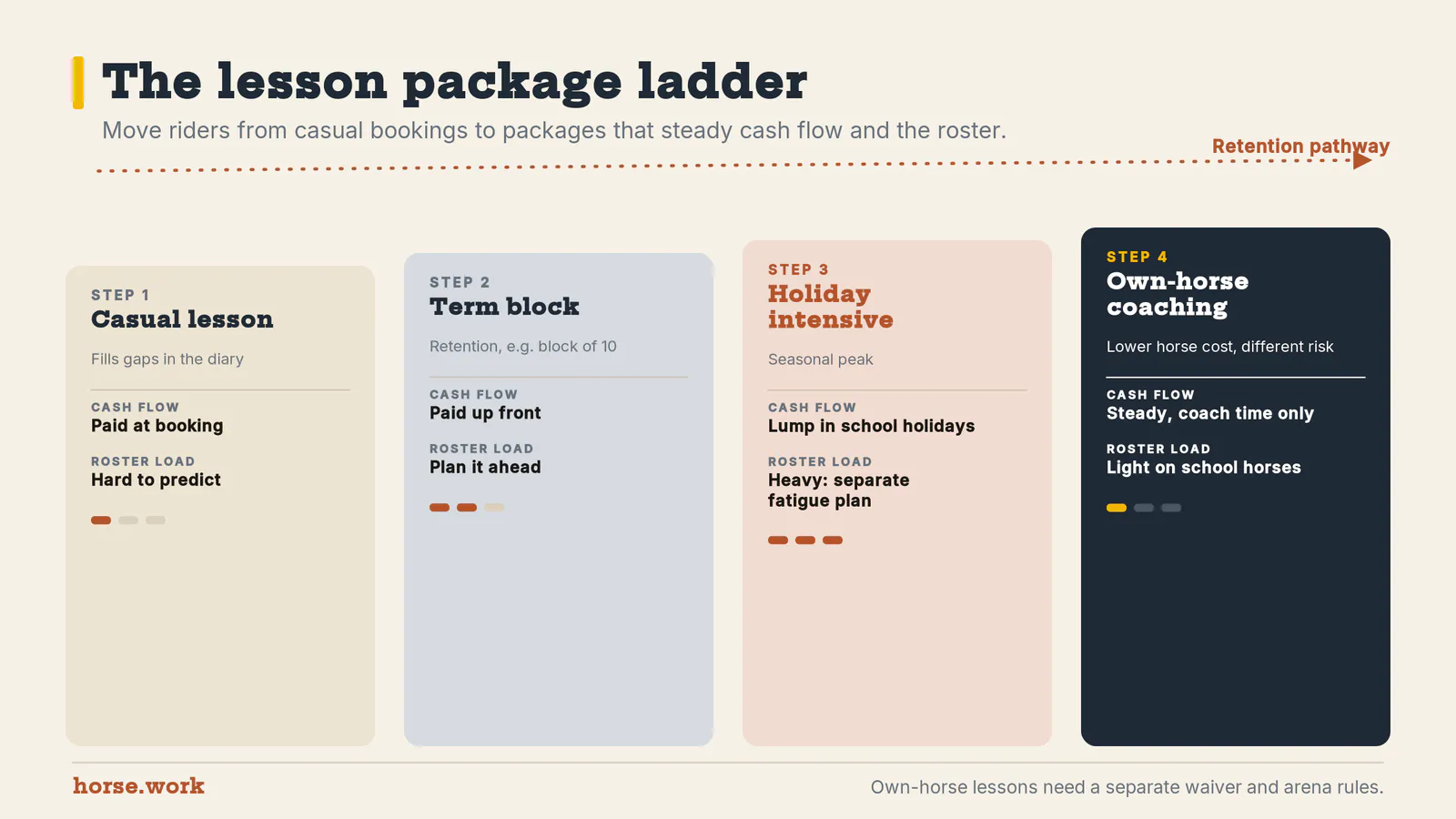
Casual "pay as you go" fills gaps; packages fill the diary. Design packages from capacity, not from a competitor's Instagram.
| Package type | Operator purpose | Design notes |
|---|---|---|
| Casual private | High rate, flexible | Price for one-to-one coach time and a suitable horse |
| Casual group / shared | Volume | Cap group size to the horses and coaches you can staff safely |
| Term / block of 10 | Cash flow and retention | Discount only if paid up front; state make-up rules |
| School holiday intensive | Seasonal peak | Separate roster and fatigue plan |
| Adult beginner block | Growing segment | Same horse where possible; clear progression notes |
| Own-horse lesson | Lower horse cost, different risk | Separate waiver and arena rules |
| Trail / trek add-on | Yield from existing horses | Only with horses conditioned for the distance [1] |
Publish inclusions: helmet hire, boots, arena vs trail, wet-weather policy, and how cancellations work. Take payment when the booking is made for casual lessons; for terms, invoice with clear GST treatment if you are registered [9][10].
Do not invent a "national average lesson price". Build rates from coach wages (or your own draw), horse keep, arena and float costs, insurance, and a realistic utilisation rate. Review every season.
School-horse roster and welfare
The Victorian hire-establishment code is blunt about which horses must not be used: horses that do not yet have their central adult incisors in wear; horses with body condition score under 2; mares more than eight months pregnant or lactating in the first three months after foaling; horses unfit from advanced old age; and horses known or suspected to be injured or ill except on veterinary advice [1]. Stallions or excessively masculine horses should not be used, or only under advanced instruction with an experienced rider [1].
Workload rules that belong on your whiteboard:
- Plan programs so horses are not overworked; rest any horse showing tiredness or distress until recovered [1].
- As a general rule, about one staff member per eight horses on a ride, with a minimum of two staff, depending on rider experience [1].
- Continuously stabled or yarded horses need daily exercise; long-term stabled horses should be spelled outside at least once a year [1].
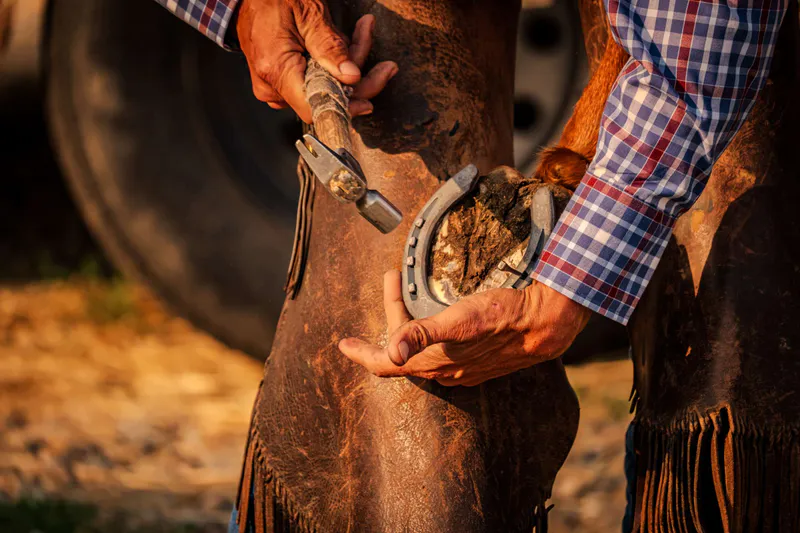
- Hooves: shod if worked on roads or hard ground; regularly trimmed or shod (preferably every 6–8 weeks); cleaned out daily if in work [1].
- Teeth checked and rasped if needed every 12 months; routine worming and vaccination on veterinary advice [1].
- Keep records for each horse — workload, health care, feed — as part of normal management [1].
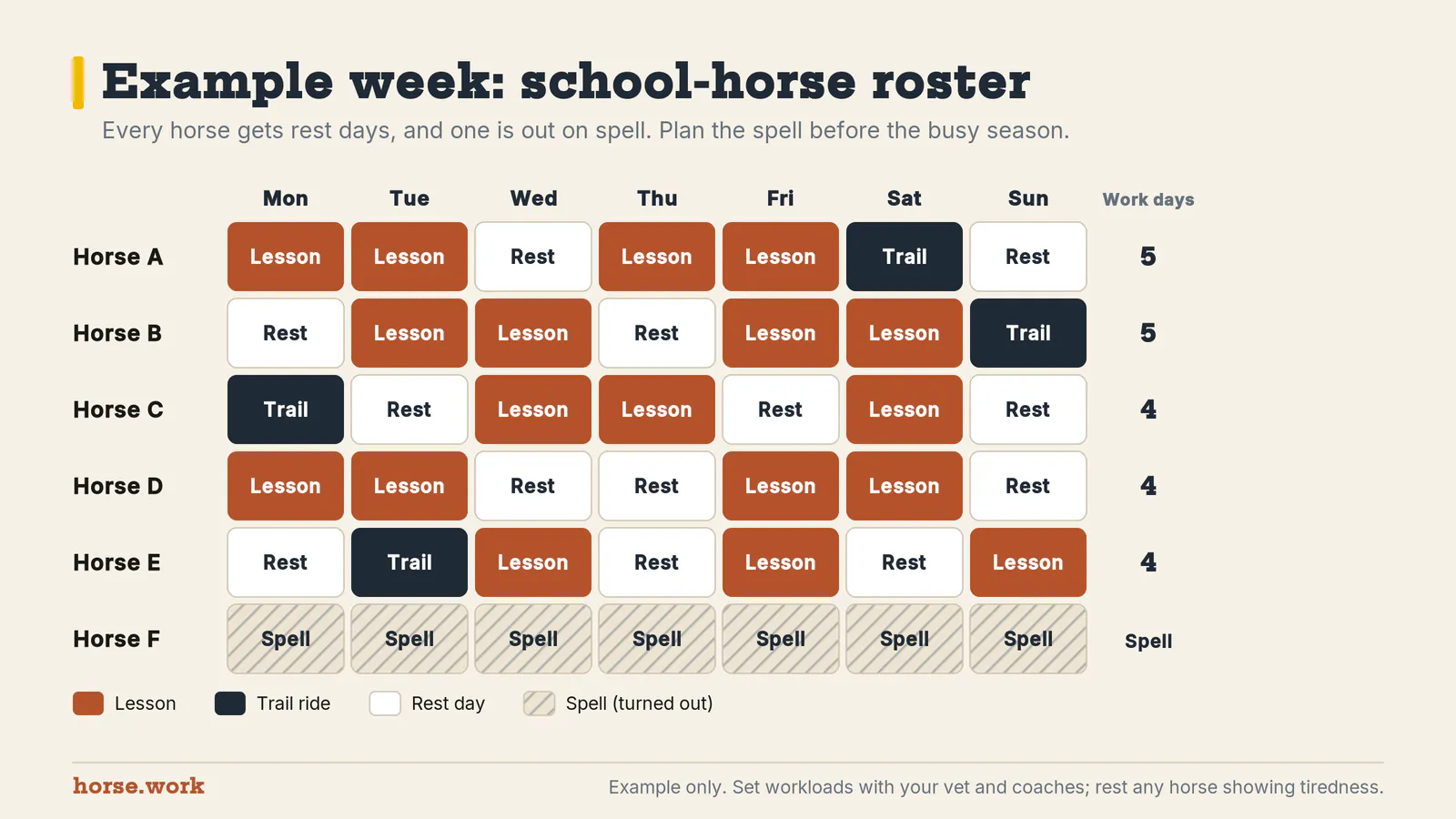
Build a spell calendar before the busy season, not after horses break down. A short roster with sound horses beats a long roster of sore ones.
Coaching credentials and staffing
Equestrian Australia's coaching pathway starts with Introductory Horse Management and Introductory Riding modules, then Introductory Coaching resources, with assessment through a Coach Educator or Skills Specific Trainer and Assessor [2]. Documents commonly required for the Introductory Coaching Certificate include current first aid (HLTAID011), a Working with Children Check or Blue Card, Sport Integrity modules, Community Coaching Essential Skills, EA concussion training, and insurance evidence where you opt for registration-only [2]. You need to be an active EA member before completing the Introductory Coach Certificate [2].
EA has partnered with Gow-Gates Insurance Brokers from 1 July 2026 for member, club, coach and official cover; policy details and claims processes sit on the EA Insurance Hub [3]. EA also explains the difference between public liability (third-party injury or property damage) and professional indemnity (financial loss from breach of professional duty) with coaching examples [4]. Read the current hub documents before you assume what is covered.
business.gov.au notes that some businesses need public liability by law for certain occupations, that workers compensation is required if you have employees, and that you should get professional advice on what is mandatory for your situation [5]. Sole traders are not covered by workers compensation for themselves [5].
Staffing checklist for operators:
- Each instructor's coaching level matches what they teach
- Working with Children Checks current for anyone who needs one in your state
- First aid coverage on every session
- Written emergency plan (medical, horse cast, fire, loose horse)
- Induction for casual staff and working pupils
- Incident and near-miss log reviewed monthly
Pony Club Australia remains a parallel pathway many families use alongside or instead of commercial lessons [7]. Partnering respectfully with a local pony club can feed your adult and "return to riding" market without trying to replace volunteer structures.
Insurance without guessing products
Talk to a licensed broker about cover that matches your actual activities: lessons, agistment of school horses, trail rides, holiday camps, off-site clinics. business.gov.au lists public liability, professional indemnity, workers compensation, property and goods-in-transit among the types businesses commonly consider, and points you to APRA and ASIC registers to check insurers and brokers [5]. EA members should start with the current EA Insurance Hub rather than an outdated flyer [3].
Do not publish premium figures you have not verified. Do not name a policy as "enough" for every school — land managers and venues often set their own minimums (for example, the $20 million public liability figure commonly required for Victorian public-land tour operator licences [6]).
List relevant brokers or products you actually hold in your client welcome pack, and keep certificates of currency where venues can see them. The insurance and finance directory is a starting point for finding professional help, not a substitute for advice.
Booking systems and client communication
Pick a system you will actually use on a wet Tuesday:
- Online booking with horse and coach capacity limits
- Waitlist for popular slots
- Automatic reminders (transactional appointment reminders are different from marketing blasts — keep promotional content out of operational SMS unless you have appropriate consent under Australian electronic marketing rules; check current ACMA guidance before you automate promotions)
- Clear cancellation window (for example, 24 hours) with the fee stated at booking
- Weather policy that does not strand coaches unpaid and does not strand clients confused
Photograph and note each rider's level and the horses they have ridden. That file is how you avoid putting a novice on a sharp schoolmaster because "the usual pony is spelled".
Retention that is not a discount war
What keeps clients:
- The same suitable horse when possible
- Visible progression (goals for the next four lessons)
- Coaches who turn up on time with safe gear
- Honest feedback when a rider needs a different horse or more practice at walk
- Easy rebooking before they leave the property
What burns clients:
- Overfaced rides
- Constant horse musical chairs
- Surprise fees at the mounting block
- No make-up pathway after a genuine illness cancellation
Offer a referral credit that you can afford (for example, one casual lesson credit after a referred rider completes a paid block). Put an expiry date on credits.
Facilities and daily ops
From the Victorian hire code, treat these as non-negotiables for any serious school: secure fencing and gates, water always available, shelter or rugging as needed, a stall or stable for sick or injured horses, prompt manure and bedding hygiene, fire equipment and a practised contingency plan [1]. Gear must fit and be sound; saddles that touch the midline or have broken trees must not be used [1].
A short daily board for the office:
- Horses in work inspected
- Water and feed checked
- Arena surface and hazards walked
- Helmets and girths checked
- First-aid kit and emergency numbers confirmed
- Tomorrow's bookings matched to available horses
Growing without breaking the roster
Add a second arena or an off-site trail product only when the existing roster has spell capacity. Hire a coach before you sell the lessons that coach will teach. List the school on horse.work riding schools and keep the profile honest about levels taught, adult options and accessibility.
New Zealand readers: use ESNZ coaching and club structures [8], local welfare codes, and IRD GST rules rather than ATO thresholds.
Operator checklist
- Legal structure, ABN and GST position reviewed with an accountant [9][10]
- Welfare code / state rules read for your type of business [1]
- Public-land licences in place where you ride for reward [6]
- Coaching credentials and WWCC / Blue Cards current [2]
- Insurance certificates match activities and venue minimums [3][4][5]
- Horse roster includes rest and spell, not only work [1]
- Packages, cancellations and wet-weather rules published
- Incident log and emergency drill in the last 12 months
- Directory listing up to date on horse.work
Run the school for the horses and the clients you can look after well — then grow. The other way round empties both the arena and the spell paddock.