Every summer, a large part of rural Australia sits under some level of bushfire risk. Horses make planning harder: they're big, they don't fit in the car, and a float takes time to hitch, load and move. The owners who come through a fire with their horses safe are almost always the ones who decided what they would do months earlier, wrote it down and practised it.
This guide walks through a horse bushfire plan in the order you'll need it: before the season, on high-risk days, when fire is close, and after it has passed. It's based mainly on Agriculture Victoria's horse bushfire advice and the CFA's horse planning template [1][2]. The principles apply in every state, but always follow your own state fire agency's warnings and advice (CFA and VicEmergency in Victoria, RFS in NSW, QFES in Queensland, and so on).
Not veterinary or emergency advice. This is general information. In an emergency, follow official warnings and the instructions of emergency services. For injured horses, call your vet.
Step 1: Decide now: leave early, or a safe area on the property
Agriculture Victoria and the CFA are clear that the decision has to be made well before a fire threatens. Leaving late is described as "a deadly option": visibility drops, roads get blocked by fallen trees, power lines and vehicles, and even quiet horses can panic in a smoke-filled float [1].
Your plan should cover two options [1]:
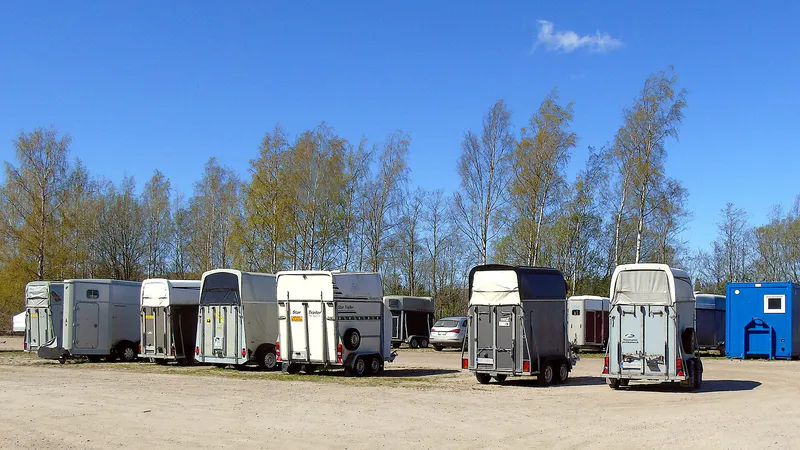
- Early evacuation to a safer district. Line up somewhere to take your horses ahead of time. Agriculture Victoria suggests showgrounds, saleyards, parks, racetracks, pony club grounds, or family and friends. Decide in advance which horses go, and make sure each one actually loads and travels calmly.
- A "safe" area on the property for when evacuation isn't possible. This should be as large as possible: a closely grazed paddock, or several paddocks opened into one, ideally with a dam that horses can get to. A large, well-fenced sand arena with water and no trees or buildings nearby that will burn readily can also work.
Then set your trigger. The CFA template uses the Fire Danger Rating as the trigger to act: the higher the rating, the more dangerous the situation if a fire starts [2]. Agriculture Victoria suggests that on Extreme or Catastrophic days you move horses into the safe area, or the night before if you'll be away or leaving early [1].
If you're travelling a long way to a relief property, the float trip planner will help you work out stops and costs before the season, not on the day.
Step 2: Write it down and share it
Agriculture Victoria recommends you [1]:
- post the plan somewhere visible, with your local brigade's phone number, your property's map reference and your PIC (Property Identification Code)
- make sure everyone who lives, works or agists on the property understands it
- meet neighbours and friends each year to agree who checks on whom and what gear you'll share
- set up a bushfire plan with the landholder if your horses are agisted. If you agist, this matters: you may not be the one on site when the fire comes.
The CFA's free Horses and Bushfires Planning Template is a good way to get the plan onto paper. It reminds owners that "not everyone thinks clearly in an emergency" and that the plan needs to be practised [2].
Step 3: Reduce fire hazards before summer
From Agriculture Victoria's list [1]:
- Clear fuel (long grass, sticks, leaf litter) for 20 to 30 metres around buildings.
- Store hay, straw, shavings, fuel and chemicals away from important buildings.
- Clean roofs and gutters; create firebreaks; put up "no smoking" signs around stables and feed sheds.
- Use a grazing plan, and consider slashing a paddock early in the season to create your safe, grazed area.
- If you rely on electric fences, make sure your boundary fences are horse-proof without power, because power often goes out during a fire.
- In high-risk areas, consider a water tank, sprinklers and a firefighting pump.
Step 4: Identify every horse
Horses that are permanently identified are reunited with their owners faster [1]. Agriculture Victoria recommends:
- a microchip (preferably), or brands, or a drawing of markings and whorls
- keeping your details current on microchip and brand registers
- registering your horses against your PIC, so authorities can identify and contact you in an emergency [1][3]
- as a last resort on the day, writing your name and phone number on the horse with livestock grease crayon, clipping it into the coat or painting it on the hooves.
Keep photos and ID details in your horse health record and in your phone.
Step 5: Pack the evacuation kit
Agriculture Victoria suggests a plastic rubbish bin with a lid, kept only for emergencies, containing [1]:
- wire cutters and a sharp knife
- torch, portable radio and fresh batteries
- water bucket and bottled water
- a spare lead rope and head collar
- woollen blanket and towels
- equine first aid items
- anything else you'd need for the first 24 hours.
Step 6: Fire-safe gear, for you and your horse
For horses [1]:
- Don't use synthetic (nylon or plastic) halters or lead ropes. They can melt and cause serious burns. Leather halters and cotton leads are safer.
- No nylon fly masks or synthetic tack.
- Take all rugs off during bushfires.
- Don't leave any gear with metal fittings on, because metal can get hot enough to burn.
For you: a wide-brimmed hat, smoke goggles, a P2 mask, long-sleeved natural-fibre clothing, leather gloves and sturdy boots. Get your horse used to you looking strange in this gear before the day [1].
When fire is close and you can't leave
If you couldn't get out early and fire is threatening, Agriculture Victoria's advice is to [1]:
- fill troughs, baths and metal buckets with reserve water
- turn off power and gas and disconnect electric fences
- strip all gear off the horses
- move them into your safe area. If you take them out of stables, close the doors so they can't run back in.
- if hoses still work, wet manes and tails or drench horses that must pass near fire.
Some important "don'ts" [1]:
- Don't shut horses in stables or small yards. Past fires show horses suffer fewer burns when they have maximum space to move; they'll often run through or around the edges of the fire and stand on burnt ground.
- Never turn horses out onto the road. They're in danger from traffic and fire, and you could be legally responsible for an accident.
- Don't stay with your horses as the fire front approaches. Your safety comes first.
After the fire has passed
Deal with spot fires first. Then, when it's safe, check every horse [1]. Agriculture Victoria lists the most common problems:
- Facial burns, eyelid and eye injuries, often from turning and running through the front.
- Smoke inhalation. Horses can look normal and then become anxious, with rapid or laboured breathing and a raised heart rate 3 to 4 hours later. Singed manes, muzzle burns, soot in nasal discharge or a high temperature mean urgent vet attention.
- Hoof damage from standing on hot ground, which can lead to heat-induced laminitis. Get horses off hot, burnt ground as fast as possible and call the vet if they're lame in the days afterwards.
- Cuts and injuries from fences.
First aid for burns is cold water, hosed or sponged gently. Expect delays: vets, Agriculture Victoria staff, the RSPCA and councils will all be stretched, and communications may be down [1].
Feed. Burnt pasture means hand-feeding, potentially for up to twelve months [1]. Keep roughage high (at least 1% of bodyweight in roughage daily, per Agriculture Victoria), feed small meals often, discard mouldy feed, and watch for colic if the diet has to change quickly [1]. Agriculture Victoria's general advice is to introduce feed changes over 3 to 5 days where you can [4]. Our feed calculator can help you budget hay once the pasture has gone.
Before turning horses back out, check burnt paddocks for hot spots, unstable trees, ash pits where roots have burned underground, downed power lines and damaged fences [1].
Your bushfire plan checklist
- Relief property arranged (and a backup)
- Every horse loads and travels calmly
- Fire Danger Rating trigger agreed and written down
- Safe paddock prepared, grazed down, with water
- Plan posted with brigade number, map reference and PIC
- Agistment landholder's plan agreed (if you agist)
- Microchips and registers up to date; horses registered against a PIC
- Evacuation kit packed; leather halters and cotton leads ready
- Hazards cleared 20–30 m around buildings
- Neighbours' meeting held
Do it this week. As Agriculture Victoria puts it, if you don't take these steps soon, "the chances are very good that you won't do anything at all" [1].