Ask ten horse owners what a horse costs a year and you'll get ten different answers, and they'll all be right. A pony on your own land and a competition horse in full-care agistment in Sydney aren't even in the same ballpark. Agriculture Victoria's starting point is simply that horse ownership "is expensive" and a long-term commitment [3].
So instead of handing you one figure, this guide lists what you actually pay for, shows the published ranges we could find (and where they come from), and walks you through building a budget for your horse.
About the numbers. There's no official, government-published average cost of keeping a horse in Australia. The ranges below come from a feed and rural retailer's 2026 guide [1] and a national horse industry survey [2]. Treat them as rough guides, and get local quotes.
What the published figures say
A retailer's 2026 guide. Grainshed, an Australian rural supplies site, publishes a 2026 breakdown. It puts the "core" costs it could estimate (agistment, feed, worming, equipment, transport) at about $4,500 to $22,000+ a year, and says most hobby owners spend $8,000–12,000 a year once farrier and routine vet care are included [1]. It deliberately leaves farrier and vet costs out of its table because they "vary too significantly by region" [1].
A national survey. The Australian Horse Industry Council surveyed 500 people in the recreational horse sector in late 2023. Respondents reported spending just under $30,000 a year on average on equine-related activity, including feed, vet care, tack and rider equipment, and transport [2]. That's spending per respondent (many own more than one horse, and some compete), not per horse, so it isn't a like-for-like comparison.
The gap between those two numbers is the point: your costs depend mostly on how and where you keep your horse.
The cost categories
1. Agistment (usually the biggest)
If you don't own land, agistment is likely your largest cost. The Grainshed guide gives these weekly ranges, which it says are based on Australian marketplace listings [1]:
| Type | Weekly range (Grainshed guide) |
|---|---|
| Basic paddock, rural/regional | $35–65 |
| Basic paddock, outer metro | $60–90 |
| Basic paddock, inner metro | $80–120 |
| Full care, regional | $140–220 |
| Full care, metro | $200–300 |
| Premium competition facilities | $250–400+ |
Source: [1]. These are one retailer's estimates, not verified averages. Rates change quickly with drought and land prices.
Check exactly what's included: feed, rugging, hard feeding, holding for the farrier, arena use. Our agistment tool helps you compare quotes on a like-for-like basis.
2. Feed
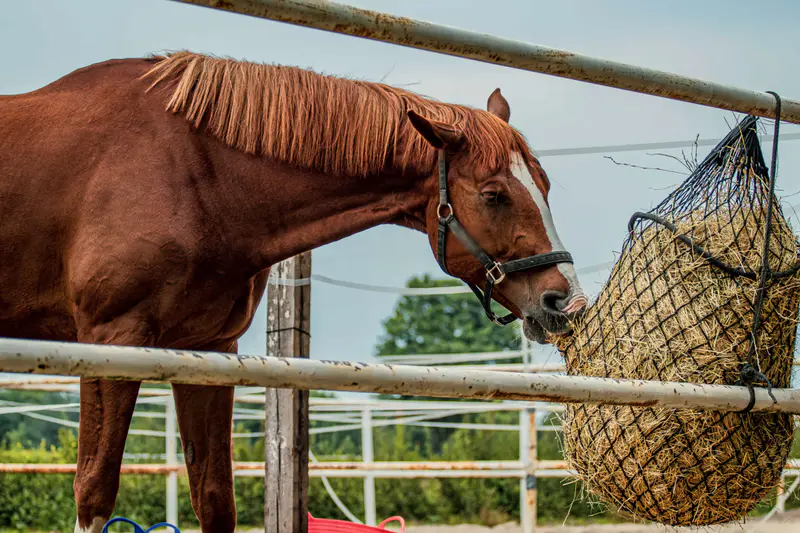
Feed needs depend on the horse's size, workload and pasture. Agriculture Victoria's guide is 1–2 kg of roughage per 100 kg of bodyweight a day: around 3–7 kg for a pony and 10–13 kg for a 500–650 kg horse [3]. For budgeting it suggests using 1.7% of bodyweight as a safe daily intake of dry feed (8.5 kg for a 500 kg horse) [4].
To turn that into dollars, multiply your horse's daily kilos by local hay and feed prices. The Grainshed guide puts annual feed (hay, hard feed and supplements) at about $1,040 to $4,160 [1], but drought years can be far higher. Our feed calculator does the kilos; your local feed store gives you the price.
3. Farrier
Agriculture Victoria says hooves need trimming every 6–8 weeks, with shoes if the horse is ridden on hard or rocky ground [3]. That's roughly 6 to 9 visits a year. Prices vary a lot by region and between trims and shoes, so the retailer guide we used doesn't give a figure [1]. Get two or three local quotes, then multiply by the number of visits.
4. Dental
Agriculture Victoria recommends a check by a trained equine dentist at least once a year for paddock horses, and every 3–6 months for horses under five and grain-fed horses [3]. Ask local dentists and vets for a price, and remember sedation may be extra.
5. Vaccinations and routine vet care
Your vet will advise which vaccines your horse needs [3]. Tetanus and strangles are commonly given; Hendra and herpes depend on where you live and what you do with your horse. Budget for at least one routine vet visit a year, plus call-out fees. See our vaccination schedule guide.
6. Worming and egg counts
The 2025 Australian guidelines move adult horses away from worming every 6–8 weeks towards faecal egg counts and fewer, targeted treatments [5]. That often means paying for a few lab tests a year but buying fewer wormers. The Grainshed guide estimates $120–240 a year for worming products [1]; add your vet's egg count fees.
7. Emergencies and insurance
This is the cost that hurts. The Grainshed guide notes that surgical colic often costs $10,000+, and that many owners keep $2,000–5,000 as an emergency fund or carry insurance instead [1]. Decide now which you'll do. For insurance, read the policy carefully: what's excluded, the excess, and any age limits. Find insurers in the insurance and finance directory.
8. Gear and replacement
Saddle, saddle blanket, bridle, grooming gear, feed and water containers, and riding clothes including a hard hat and boots: Agriculture Victoria lists these as costs to plan for before you buy [3]. Add rugs and a first aid kit to your own list. The Grainshed guide puts ongoing replacement at roughly $200–800 a year, with the first-year setup much higher [1].
9. Transport
Float, tow vehicle and fuel, or paying a transporter. If you don't own a float, budget for hire or transport to the vet, shows and clinics. Our float trip planner estimates the cost of a trip.
10. Lessons, clubs and competition
Pony club, adult riding club, lessons and entry fees add up quickly. Agriculture Victoria lists access to pony club or riding lessons among costs to consider [3].
Build your own budget in five steps
- Pick your keeping arrangement: your own land, paddock agistment or full care. Get two or three real quotes.
- Work out feed in kilos per day from your horse's weight (weight calculator), then price it at your local feed store.
- Ring for quotes from a farrier, dentist and vet, or use our quote request tool to ask several at once. Multiply by visits per year.
- Add the extras: worming and egg counts, vaccines, gear, transport, lessons.
- Add a buffer for emergencies (savings or insurance), and for drought years when hay prices rise.
Our horse ownership cost calculator walks you through these steps and adds them up. It asks for your local prices rather than inventing averages.
A worked example (structure only)
Here's how a budget comes together. Replace every number in brackets with your own quotes.
| Item | How to calculate | Annual |
|---|---|---|
| Agistment | [weekly rate] × 52 | $ |
| Hay and feed | [kg per day] × 365 × [price per kg] | $ |
| Farrier | [price per visit] × [visits: 6–9] | $ |
| Dental | [price] × [visits: 1–4] | $ |
| Vaccines and vet check | [vet quote] | $ |
| Egg counts and wormers | [tests + products] | $ |
| Insurance or emergency fund | [premium or savings target] | $ |
| Gear replacement | [estimate] | $ |
| Transport | [trips × cost] | $ |
| Lessons, clubs, entries | [your plans] | $ |
| Total | $ |
Ways to keep costs down (without cutting corners)
- Keep your horse at a healthy weight. It's cheaper to feed, and less likely to get laminitis.
- Test before you worm. Fewer, targeted treatments can save on products [5].
- Book the farrier and dentist on schedule. Small problems cost less than lameness.
- Buy hay in bulk if you have dry storage.
- Share float trips, feed orders and call-out fees with other owners on the same property.
Before you buy
Agriculture Victoria suggests asking yourself: can you afford to keep feeding the horse if the pasture runs out? Do you have the time? Is the property suitable and close enough to visit daily [3]? It also recommends a pre-purchase vet check: "While expensive, this may save you from buying a horse that is unhealthy, lame or otherwise unsuitable" [3].
Horses can live for decades. Budget for the long haul, not just the first year.