Not veterinary advice. Other skin conditions can look a lot like Queensland itch. If your horse is itchy, rubbing or has broken skin, call your vet for a diagnosis and a treatment plan. This guide doesn't cover medicines or doses; those are for your vet to decide.
If your horse starts rubbing its tail and mane raw as the weather warms up, and did the same last summer, Queensland itch is a likely suspect. The RSPCA calls it "a miserable condition for horses" and says it should never just be ignored [1].
It's also a long game. A 2023 review by University of Queensland veterinary researchers says there's currently no cure, and management is lifelong, time-consuming and costly [2]. The good news is that the main control measures are practical things you can do around the property.
What Queensland itch is
Queensland itch is the Australian name for insect bite hypersensitivity, also called sweet itch or summer eczema elsewhere [2]. It's most often an allergic reaction to the saliva of biting midges (Culicoides species), although other insects can be involved [2]. The UQ review describes it as the most common cause of itchiness in horses [2].
When an allergic horse is bitten, small, intensely itchy lumps develop. The horse rubs, which causes hair loss and irritated skin; serum oozes and scabs form, and in long-standing cases the skin becomes thickened and corrugated [1].
Where and when it happens
The RSPCA says Queensland itch is very common in northern Australia, roughly from Taree, NSW, north, with pockets further south where the climate suits the midges. It's most common in Queensland but regularly seen in NSW [1].
It's mainly a summer problem, although in some areas midges are around nearly all year [1]. It's particularly bad where there's a lot of still, stagnant water for midges to breed in [1].
A horse that has never itched before isn't necessarily safe, either. The RSPCA warns that horses brought in from unaffected areas may develop it [1]. The UQ review notes most horses start showing signs at around 3–4 years of age, and signs tend to get worse as they get older [2].
Signs to look for
Suspect Queensland itch if your horse develops an itchy skin condition that comes back every summer, mainly around the top of the tail and the base of the mane [1]. In bad cases the whole back, the ears and the face are affected, and some horses also itch on the chest and belly [1]. The UQ researchers note that, in their experience, lesions on the underside of the body are comparatively rare in Australia [2].
Watch for:
- rubbing the tail, mane, rump or face on fences, trees and stable walls
- broken hair, bald patches or a "rat tail"
- oozing skin and scabs
- thickened, wrinkled skin in long-term cases [1].
The UQ review also notes that affected horses show more itching behaviour in the evening, when midges are most likely to be feeding [2].
Look-alikes: why you need a vet
The RSPCA lists other conditions that can look similar, including ringworm, tail itch, bites from stable or buffalo flies, and rain scald [1]. Some of these need very different treatment. If you're not sure what you're looking at, the RSPCA's advice is to ask your vet [1]. Find an equine vet near you if you don't have one.
Management: keep the midges off
The UQ review describes minimising exposure to midges as the most important control measure, including rugging, stabling at dawn and dusk, and fans [2]. Because susceptible horses are usually affected every year, the RSPCA says long-term midge control is needed [1].
1. Stable at dawn and dusk
Midges are most active in the late afternoon and early morning [1]. The RSPCA suggests keeping susceptible horses in insect-proof stables at those times [1].
2. Use a fan
A fan in the stable helps keep midges away. The RSPCA explains that midges aren't strong enough to fly in the strong breeze a fan creates [1]. Make sure any fan and its power lead are mounted safely, well out of the horse's reach.
3. Rug at the high-risk times
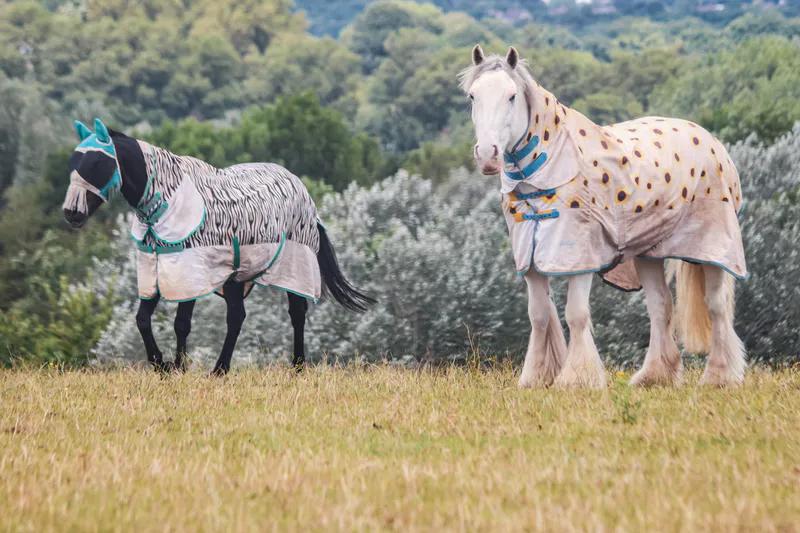
The RSPCA says a lightweight "cotton" rug (usually a cotton and synthetic blend) is a must if the horse is outside in the late afternoon and early morning [1]. For an itchy horse, coverage of the areas it rubs matters most; talk to your saddlery about rugs designed for midge protection. Our saddlery directory lists local stores.
A warning about hoods: an itchy horse is much more likely than usual to rub its head, and a hood can slip over the eyes [1]. Check hooded horses often.
Agriculture Victoria advises checking any rug daily to make sure it isn't rubbing, slipping or leaking [3]. That's doubly important on a horse with sore skin. Our rug size chart covers measuring for a good fit.
4. Think about where the horse lives
Because midges breed in still, stagnant water [1], paddocks near swampy ground or standing water are likely to be worse. If you're choosing agistment for a horse with Queensland itch, ask whether there's a stable or yard you can use at dawn and dusk, and whether you can put on and take off rugs at those times. Our agistment agreement checklist can help you get that in writing.
5. Topical products: know their limits
Repellents and topical products are part of management [2], but the RSPCA notes paddocked horses on large properties are hard to treat and many remedies have had variable success [1]. A few practical cautions from the RSPCA [1]:
- Rain reduces the effect of sprays and topical treatments, so reapply after wet weather in line with the label.
- Oil-based products can act as a barrier to midges, but take care in hot weather because the oil can burn the horse.
Always follow the product label, and ask your vet before using anything new on broken skin.
Treatment is a vet's job
When the skin is already inflamed, your vet may recommend medicated washes, creams or other medicines to settle the itch and let the skin heal [1]. Some particularly susceptible horses need treatment every year [1].
There are good reasons to leave the choice of medicines to your vet:
- Corticosteroids can reduce the severity of the disease, but because of potential complications with long-term use in horses, the UQ review says they should be used only as a short-term tool, and ideally after testing for insulin dysregulation [2].
- Antihistamines haven't proven particularly effective in horses with insect bite hypersensitivity [2].
- Desensitisation (allergy shots) fails in some cases, likely because different midge species are present in different regions [2].
What about a vaccine?
Researchers overseas have trialled vaccines that target the immune signals behind the itch (interleukin-5 and interleukin-31), with promising results [2]. However, the UQ review notes that the large size and weight of horses currently rules out the economical use of these vaccines in horses [2]. In other words, it's an area to watch, not something to plan your season around. Ask your vet if anything new becomes available.
Selling or moving an itchy horse
The RSPCA suggests that if a horse with Queensland itch is being rehomed or sold, it's worth aiming to move it south to an area that isn't affected [1]. If you're buying a horse that's moving north into midge country, ask the seller and your vet whether it has a history of summer itch.
Frequently asked questions
Is Queensland itch contagious? It's an individual horse's allergic reaction to midge bites, not an infection [2]. But other skin conditions can look the same, which is one reason to get a diagnosis [1].
Will my horse grow out of it? Unlikely. The UQ review says signs usually worsen with age and management is lifelong [2].
Does it only happen in Queensland? No. It's very common roughly from Taree north and regularly seen in NSW, with pockets further south [1].
Midge-season checklist
- Vet has confirmed it's Queensland itch, not a look-alike
- Insect-proof stable or yard available for late afternoon and early morning
- Fan mounted safely in the stable
- Lightweight rug that fits well, checked daily for rubbing and slipping
- Hood (if used) checked often for slipping over the eyes
- Repellents and topical products used as labelled, reapplied after rain
- Skin checked daily for new rubbing or broken skin
- Vet's plan written on your horse health record
- Seasonal reminders set in the care planner
Spring is the time to get set up, before the first itchy nights. If the rubbing has already started, call your vet.